

What We Learned in Phoenix. Late, Large Scoliosis Curves Can Still Be Treated
Bay Area Scoliosis Center, Alameda, CA
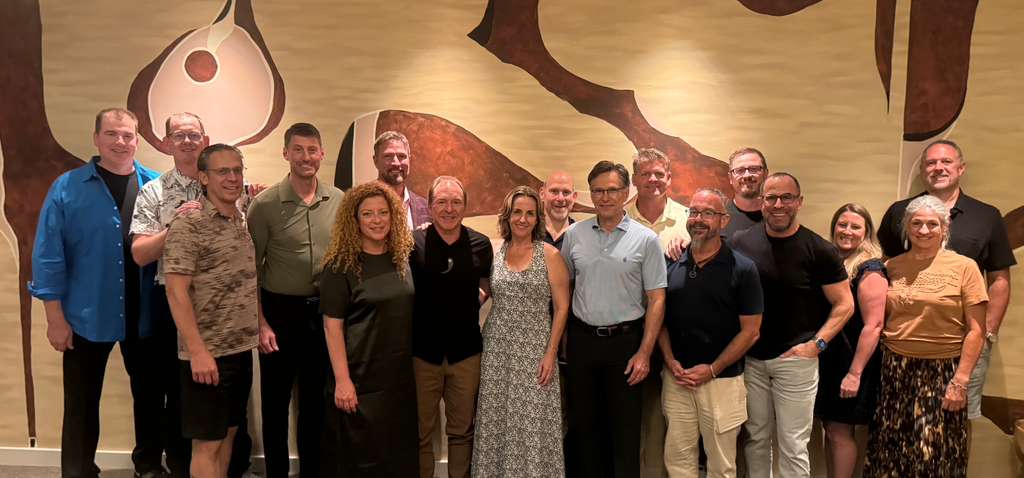
Last weekend, Dr. Cynthia Boyd, DC, Clinical Director of Bay Area Scoliosis Center and Symmetry Health Center, attended the 48th Annual Chiropractic BioPhysics® (CBP®) Conference in Phoenix, Arizona. One Saturday lecture stood out for the patients we see in Alameda who are treated for scoliosis.
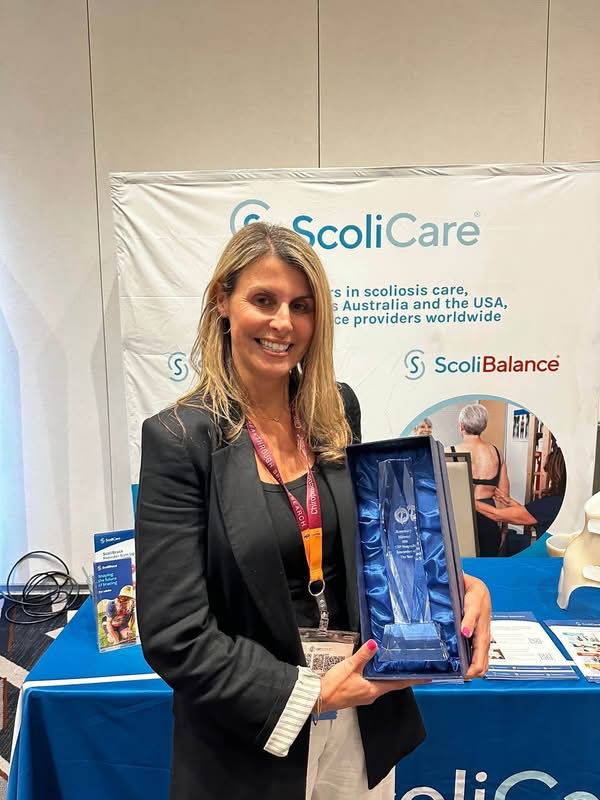
Rose Mirenzi, PT, Chief of Research and Communications at ScoliCare® and a PhD candidate at RMIT University, spoke on Adolescent Idiopathic Scoliosis. Late, Large, and Still Treatable. At the CBP® Non-Profit meeting at the close of the conference, Dr. Deed Harrison named her Researcher of the Year.
Her message was straightforward: a curve found later than textbooks prefer is not automatically “too late,” and a larger curve is not automatically a one-way path to surgery. What often decides the result is how soon care starts, how the curve is measured, and whether the brace and exercises are actually done at a high enough dose.
Screening works. Waiting is the problem.
School and clinic screenings can find scoliosis. A simple standing exam, the Adams forward-bend test (the child bends forward while the clinician looks for a rib hump), and a scoliometer (a small inclinometer placed on the back) are useful tools. In one large review, combining those tests with a surface-mapping method called Moiré topography detected scoliosis with about 94% sensitivity and 99% specificity. In plain terms: the tests are good at finding a real curve and good at avoiding false alarms.
Bracing works when the brace is worn. The landmark study most doctors still cite is BrAIST—the Bracing in Adolescent Idiopathic Scoliosis Trial, published in the New England Journal of Medicine in 2013. It compared bracing with watchful waiting in growing teens at high risk of getting worse. The trial was stopped early because the benefit was clear. About 72% of braced patients stayed below the usual surgical threshold, compared with 48% who were only observed. Teens who wore the brace more hours did better. A brace in the closet is not treatment.
What research still lacks is a clear “prescription strength” for scoliosis-specific exercise. Those exercises are often called PSSE—physiotherapeutic scoliosis-specific exercise. They are not general core workouts. They are curve-pattern exercises meant to help the teen actively straighten, derotate, and stabilize the spine. About 15 studies show that PSSE can help when dose is tracked. Almost none explain, in usable detail, who should teach the program, how the home routine should be built, or how to measure whether the teen is actually doing it. Families who need the most exercise are often given the least precise plan.
Many teens arrive after the easy window has closed
A Canadian study of 333 teens referred to a specialist told a familiar story. Average age was 14.1 years. Average curve size—the Cobb angle, the standard measurement of the bend on an X-ray—was already 36.8°. Only 17% still met the usual research criteria for bracing at that first visit. Fifty-five percent were already at or past Risser 2. Risser is a 0-to-5 score of how much growth remains, read from the pelvic growth plate on the same spinal X-ray. Higher Risser generally means less growth left. Twenty percent arrived with curves already above 40°, a range many offices still call “surgical.” Families, not clinicians, noticed 59% of those curves first—and family-found curves were about 7° larger.
When schools stop screening, the first clinician who looks at a teen’s back is the screening program. After Norway ended school screening, bracing rates fell from 68% to 38%, and surgery rose from 32% to 62%. The odds of surgery were about 3.5 times higher. That is the difference between starting a brace in time and discussing fusion.
“It doesn’t look too bad” is often a measurement problem
Mirenzi described an 18-month path we still see. A parent notices uneven shoulders or a rib hump. A first visit says, “Let’s check again in six months.” A later visit calls a 20° curve “not too bad.” The teen finally reaches a scoliosis clinic at 45°, Risser 3, with a 10° angle of trunk rotation. Angle of trunk rotation, or ATR, is the number on the scoliometer during the forward-bend test. International referral guidance is about 5–7°. That is a measured number, not a visual impression.
Cobb angle is only a side-to-side number on a flat film. Scoliosis is a three-dimensional problem: the spine also rotates and often loses its normal side-view curves. Two teens can share the same Cobb angle and have very different rotation and very different risk. A flattened mid-back—too little thoracic kyphosis—is common in thoracic adolescent idiopathic scoliosis and should be visible on a standing side-view X-ray.
At Bay Area Scoliosis Center we examine posture, perform the Adams test, record ATR at each level of the spine, and obtain a standing full-spine X-ray from the front and the side, including the pelvis. That is how we decide whether to observe, brace, exercise, or refer.
The old “too late” line is a research rule, not a biological wall
Many textbooks still treat “Risser 0–2 and 25–40°” as the only brace-worthy window. That line was written so research studies could be compared with one another. It was not written as a law of nature.
Growth does not switch off on a single day. Newer observational studies show that some teens at Risser 3–4 still progress after the brace comes off; weaning at Risser 4 can allow more loss than waiting until Risser 5; and 40–50° curves can keep moving after maturity. Younger, less mature spines—especially those with an open triradiate cartilage at the hip—still get more benefit from bracing. Early care is more efficient. Late care is not automatically futile.
Larger curves can still change when treatment dose is high
Evidence for curves above 40° is not as strong as BrAIST. Most reports are case series or clinic cohorts, with one controlled study. They generate a hypothesis; they do not close the question. They are consistent enough that “wait and see” is a poor default if the family wants to try non-surgical care.
Examples presented in Phoenix included clinic series in which many patients who declined surgery still improved or held their curves, and a 2025 Healthcare case series of five severe thoracic curves treated with ScoliBrace® plus intensive scoliosis-specific exercise. Mean Cobb angle moved from 53.4° to 29.6°. That is a clinical signal in a small group, not a randomized trial.
A 2024 ScoliBrace® pilot, using the brace alone, found about 0.8° less curve for each extra hour of wear (typically 15–18 hours a day). Hours matter even before exercise is added. SOSORT—the International Society on Scoliosis Orthopaedic and Rehabilitation Treatment—already recommends active self-correction. That is the job of a structured program such as ScoliBalance®.
What families should expect at an evaluation
Mirenzi’s “Monday morning” list is the same standard we use:
- Look. Every adolescent who comes in for any reason can have the back examined. Posture is information.
- Bend. The Adams forward-bend test takes about two minutes.
- Measure. Record ATR at each level. Refer around 5–7°. Obtain standing full-spine X-rays, front and side.
- Do not delay. A curve in the bracing range is time-sensitive. Finding a curve and not referring it is one of the worst outcomes in this literature.
- Write it down. Age, growth stage, Cobb angle, ATR, and how long it took to reach real treatment. That timeline is often missing from records.
Watch-and-wait is not a plan for a progressive curve in a growing spine.
How we treat at Bay Area Scoliosis Center
We have been a ScoliBrace® and ScoliBalance® certified center since 2013 and a CBP® clinic before that. Dr. Boyd’s attendance at this year’s conference was a check against the newest evidence, not a change of method.
Care is built in layers:
- Measurement first — posture, forward-bend test, scoliometer, and standing X-rays in more than one plane.
- ScoliBrace® when indicated — a custom, three-dimensional, over-corrective brace made from a body scan. Wear time is part of the prescription.
- ScoliBalance® — scoliosis-specific exercise with a home program and follow-up, because exercise only works at a dose the teen can sustain.
- CBP® structural rehabilitation — Mirror Image® adjusting, traction, and postural work aimed at the alignment that a single Cobb number does not capture.
We treat early curves promptly. We also evaluate teens who arrive later or with larger curves instead of turning them away on a textbook cutoff alone. Some still need a surgical opinion. Many deserve a measured trial of high-dose conservative care first, with an honest discussion of what the evidence can and cannot promise, and of how many hours of brace wear and exercise will be required.
The research behind this work needs support
CBP® Non-Profit, Inc. is a 501(c)(3) organization funded solely by donations. On a modest budget it publishes a large volume of peer-reviewed spine and posture research each year. That literature supports the CBP® methods used at Bay Area Scoliosis Center and Symmetry Health Center. Dr. Cynthia Boyd, DC, Clinical Director in Alameda, serves on the CBP® Non-Profit board and sees firsthand how much work those publications require.
If this report is useful, please consider supporting that research:
Donate to CBP® Non-Profit, Inc.
CBP® Non-Profit — About Us / Board
Donations may be tax-deductible to the extent allowed by law.
If you are a parent—or you care for one
If you have noticed a rib hump, uneven shoulders, or a shifting waist in a child between about 10 and 18 years of age, do not wait for the next routine visit on the theory that “it does not look too bad.” The curve is visible on the body before it is measured on film.
Bay Area Scoliosis Center evaluates patients in Alameda and works with families across the East Bay and the greater San Francisco Bay Area. We also co-manage with referring chiropractors, physical therapists, and physicians. A referral does not mean giving the patient away.
Bay Area Scoliosis Center
1708 Park Street, Suite 130A
Alameda, CA 94501
Telephone: (510) 225-6469
bayareascoliosiscenter.com
This article is an educational summary of a professional conference presentation and published studies. It is not a substitute for an individual examination. Treatment depends on curve pattern, size, remaining growth, symptoms, and family goals.
Studies and references from the lecture
These are the principal papers Rose Mirenzi cited. Each entry includes a PubMed link.
- Dunn J, et al. Screening for adolescent idiopathic scoliosis: evidence report and systematic review for the US Preventive Services Task Force. JAMA. 2018;319(2):173-187. https://pubmed.ncbi.nlm.nih.gov/29318283/
- Weinstein SL, Dolan LA, Wright JG, Dobbs MB. Effects of bracing in adolescents with idiopathic scoliosis (BrAIST). N Engl J Med. 2013;369(16):1512-1521. https://pubmed.ncbi.nlm.nih.gov/24047455/
- Adobor RD, et al. Scoliosis detection, patient characteristics, referral patterns and treatment in the absence of a screening program in Norway. Scoliosis. 2012;7:18. https://pubmed.ncbi.nlm.nih.gov/23098059/
- Anthony A, Zeller R, Evans C, Dermott JA. Adolescent idiopathic scoliosis detection and referral trends: impact on treatment options. Spine Deform. 2021;9(1):75-84. https://pubmed.ncbi.nlm.nih.gov/32780304/
- Richards BS, Bernstein RM, D’Amato CR, Thompson GH. Standardization of criteria for adolescent idiopathic scoliosis brace studies: SRS Committee on Bracing and Nonoperative Management. Spine. 2005;30(18):2068-2075. https://pubmed.ncbi.nlm.nih.gov/16166897/
- Delbrück H, et al. Results of bracing adolescent idiopathic scoliosis in the context of clinical practice and the Scoliosis Research Society’s criteria: 5-year observational study. Eur J Med Res. 2024;29:521. https://pubmed.ncbi.nlm.nih.gov/39468711/
- Shitozawa H, et al. Curve progression after the termination of bracing for adolescent idiopathic scoliosis: usefulness of combining the proximal femur maturity index (PFMI) and Risser staging. Cureus. 2024;16(11):e73395. https://pubmed.ncbi.nlm.nih.gov/39659310/
- Yu SH, et al. Post-maturity progression in adolescent idiopathic scoliosis curves of 40° to 50°. J Bone Joint Surg Am. 2023;105(4):277-285. https://pubmed.ncbi.nlm.nih.gov/36689574/
- Aulisa AG, et al. Brace treatment of idiopathic scoliosis is effective for a curve over 40 degrees, but is the evaluation of Cobb angle the only parameter for the indication of treatment? Eur J Phys Rehabil Med. 2019;55(2):231-240. https://pubmed.ncbi.nlm.nih.gov/29517186/
- Lusini M, et al. Brace treatment is effective in idiopathic scoliosis over 45°: an observational prospective cohort controlled study. Spine J. 2014;14(9):1951-1956. https://pubmed.ncbi.nlm.nih.gov/24295798/
- Weiss HR, et al. First end-result of a prospective cohort with AIS treated with a CAD Chêneau style brace. J Phys Ther Sci. 2019. https://pubmed.ncbi.nlm.nih.gov/32038069/
- Nalda A, Mirenzi R, Doueihi NL, McAviney J. A non-surgical multimodal approach to severe thoracic adolescent idiopathic scoliosis combining ScoliBrace and scoliosis-specific rehabilitation therapies: a case series. Healthcare. 2025;13(13):1522. https://pubmed.ncbi.nlm.nih.gov/40648546/
- Lim KBL, Mak HKW, et al. A pilot study on the “ScoliBrace” in the treatment of adolescent idiopathic scoliosis. Eur J Orthop Surg Traumatol. 2024;34(4):1803-1809. https://pubmed.ncbi.nlm.nih.gov/38416233/
- Fazalbhoy A, McAviney J, Mirenzi R. Compliance of physiotherapeutic scoliosis-specific exercise in adolescent idiopathic scoliosis: a scoping review. J Clin Med. 2025;14(9):2950. https://pubmed.ncbi.nlm.nih.gov/40363981/
- Negrini S, et al. 2016 SOSORT guidelines: orthopaedic and rehabilitation treatment of idiopathic scoliosis during growth. Scoliosis Spinal Disord. 2018;13:3. https://pubmed.ncbi.nlm.nih.gov/29435499/
- Cheng JC, Castelein RM, et al. Adolescent idiopathic scoliosis. Nat Rev Dis Primers. 2015;1:15030. https://pubmed.ncbi.nlm.nih.gov/27188385/
- Poncet P, Dansereau J, Labelle H. Geometric torsion in idiopathic scoliosis: three-dimensional analysis and proposal for a new classification. Spine. 2001;26(20):2235-2243. https://pubmed.ncbi.nlm.nih.gov/11598514/
- Samuelsson L, Norén L. Trunk rotation in scoliosis: the influence of curve type and direction in 150 children. Acta Orthop Scand. 1997;68(3):273-276. https://pubmed.ncbi.nlm.nih.gov/9246992/