

X-Ray Safety in Scoliosis Care: Why Routine Monitoring Is Safe, Essential, and Evidence-Based
At Bay Area Scoliosis Center in Alameda, CA, we understand that when your child—or you as an adult—is recommended for routine or follow-up X-rays as part of our ScoliBrace® or ScoliBalance® programs, concerns about radiation often come up. Many parents and patients have heard outdated messages that “X-rays cause cancer” or that any radiation is dangerous, especially for growing kids. These worries are completely understandable. We hear these concerns frequently during phone consultations and new patient visits.
You may also hear about the EOS imaging system, which is heavily marketed in scoliosis care as a much safer, ultra-low radiation option. While EOS does use less radiation and can capture front and side views in one scan, we have carefully evaluated it and continue to use modern digital X-ray as our standard — and here’s why.
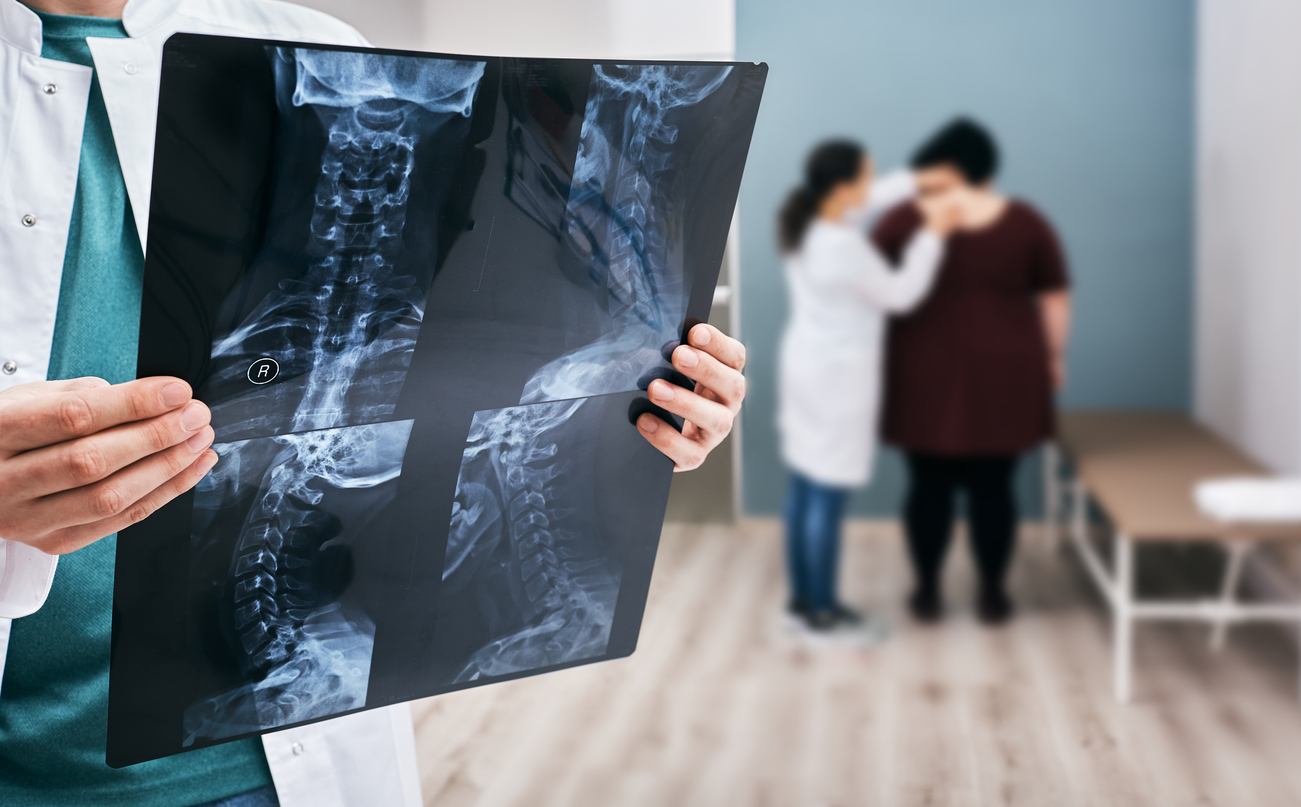
Why We Use Digital X-Ray Instead of EOS
EOS scans take significantly longer — often 15 to 20 seconds or more — while a digital X-ray is captured in a fraction of a second. That longer scan time means patients must stand perfectly still. For fidgety kids, young children, elderly patients, or anyone with balance issues, even slight movement during the EOS scan can create motion artifacts that reduce the accuracy of Cobb angle measurements and curve assessment.
In scoliosis care, we need the sharpest, most reliable standing images possible to precisely track progression, design your custom 3D ScoliBrace®, and measure real improvements with ScoliBalance® exercises. Because the radiation dose from today’s modern digital X-ray systems is already extremely low, we do not view EOS as a superior option for the high-precision monitoring our patients require.
Why X-Rays Are Critical for Effective Scoliosis Management
Scoliosis curves can progress quickly, especially in growing children. Without objective measurements from standing full-spine X-rays, it’s impossible to:
- Accurately measure Cobb angles and curve patterns
- Design a truly custom 3D ScoliBrace® that corrects in all three planes
- Track progress with ScoliBalance® exercises
- Detect subtle changes early and adjust treatment before surgery becomes the only option
Routine monitoring (typically every 3–6 months during growth spurts) allows us to catch progression and intervene conservatively.
The Reality of Radiation Doses in Modern Scoliosis X-Rays
Today’s digital X-ray technology has dramatically reduced exposure. A standard posterior-anterior (PA) full-spine scoliosis X-ray delivers roughly 0.5–1 mSv — about the same as a few months of natural background radiation (we all receive ~3 mSv per year from the environment). Even with several follow-up X-rays over years of monitoring, cumulative doses remain well below levels associated with any measurable risk. Modern equipment, proper PA positioning, tight collimation, and digital detectors keep doses minimal while providing the clear images we need.
What the Research Actually Shows: Debunking Outdated Fears
For decades, radiation safety guidelines relied on the “linear no-threshold” (LNT) model. Newer research has challenged this for the very low doses used in diagnostic imaging.
Key studies by Dr. Paul A. Oakley and Dr. Deed E. Harrison provide strong reassurance:
- “5 Reasons Why Scoliosis X-Rays Are Not Harmful” (2020) Read the full article
- “X-Ray Imaging Is Essential for Contemporary Chiropractic and Manual Therapy Spinal Rehabilitation” (2018) Read the full article
- Additional papers including “Death of the ALARA…” (2020), “X-Ray Hesitancy…” (2020), “Radiophobic Fear-Mongering…” (2021), and “The Rationale and Safety of Routine Imaging…” (2025) directly address radiophobia and confirm that routine X-rays in scoliosis and spine care are safe. Death of the ALARA X-Ray Hesitancy Radiophobic Fear-Mongering The Rationale and Safety…
These findings align with the American Association of Physicists in Medicine (AAPM) 2019 Position Statement, which recommends discontinuing routine gonadal and fetal shielding.
In short: Routine diagnostic X-rays for scoliosis monitoring are safe. The real risk is under-imaging and letting curves progress undetected.
Our Commitment at Bay Area Scoliosis Center
Your safety and your child’s long-term health are our top priorities. That’s why we:
- Use state-of-the-art digital X-ray systems with the lowest possible doses
- Take only the views needed (usually a single PA scoliosis view for monitoring)
- Follow evidence-based practices and limit imaging to clinical decision-making
- Provide transparent discussions about any concerns before proceeding
We’ve helped hundreds of families in the East Bay achieve curve stabilization and improved posture with ScoliBrace® and ScoliBalance® — all while keeping radiation exposure minimal and well-justified.
Ready to Move Forward with Confidence?
If you’re a parent worried about your child’s scoliosis X-rays, or an adult living with scoliosis who wants the most accurate, non-surgical care possible, please know this: the evidence supports proceeding with the recommended imaging. Accurate monitoring is what allows us to deliver life-changing results.
We’re happy to review any specific questions during your next visit or phone consultation. Feel free to share this article with family members or bring it along—our goal is for you to feel fully informed and reassured.
Visit Us in our Alameda Office
Just over the Park Street Bridge in the same building as Alameda Brewing and Crispian Bakery, and right next door to the legendary Alameda Natural Grocery—a foodie paradise where you can grab healthy treats after your appointment.
Your spine health matters—and with today’s science, routine X-rays are one of the safest tools we have to protect it.
References
- Oakley PA, Ehsani NN, Harrison DE. 5 Reasons Why Scoliosis X-Rays Are Not Harmful. Dose Response. 2020;18(3):1559325820957797. https://pmc.ncbi.nlm.nih.gov/articles/PMC7488912/
- Oakley PA, Cuttler JM, Harrison DE. X-Ray Imaging Is Essential for Contemporary Chiropractic and Manual Therapy Spinal Rehabilitation: Radiography Increases Benefits and Reduces Risks. Dose Response. 2018;16(2):1559325818781437. https://pmc.ncbi.nlm.nih.gov/articles/PMC6024283/
- Oakley PA, Harrison DE. Death of the ALARA Radiation Protection Principle as Used in the Medical Sector. Dose Response. 2020;18(2):1559325820921641. https://pmc.ncbi.nlm.nih.gov/articles/PMC7218317/
- Oakley PA. X-Ray Hesitancy: Patients’ Radiophobic Concerns Over Medical X-rays. Dose Response. 2020;18(3):1559325820959542. https://pmc.ncbi.nlm.nih.gov/articles/PMC7503016/
- Oakley PA, Harrison DE. Radiophobic Fear-Mongering, Misappropriation of Medical Radiation Protection Concepts, and the Linear No-Threshold (LNT) Hypothesis… Dose Response. 2021;19(1):1559325820984626. https://pmc.ncbi.nlm.nih.gov/articles/PMC7883173/
- Oakley PA, Haas JW, Harrison DE. The Rationale and Safety of Routine Imaging in Rehabilitative Spine Care… Dose Response. 2025;23(3):15593258251374411. https://pmc.ncbi.nlm.nih.gov/articles/PMC12397594/
- American Association of Physicists in Medicine (AAPM). Position Statement on the Use of Patient Gonadal and Fetal Shielding (PP 32-A, 2019). https://www.aapm.org/org/policies/details.asp?id=468